Mixer Grinder Wattage Guide: 500W vs 750W vs 1000W — What Do You Actually Need?
The most-asked question before buying a mixer grinder: kitna watt chahiye? Here's exactly what each wattage can and cannot grind, with real Indian kitchen examples.

Ananya specializes in kitchen and cooking equipment. A trained chef and food writer, she brings a practical perspective to product reviews.
Walk into any appliance store and the first spec quoted is wattage — 500W, 750W, 1000W. But nobody explains what those numbers mean for your cooking. So here it is: a task-by-task breakdown of exactly what each wattage handles in a real Indian kitchen.
What wattage actually measures (and what it doesn't)
Wattage is the motor's power draw — a proxy for torque, the force that keeps blades spinning when they hit something hard. More torque means harder ingredients, bigger batches, and longer runs without overheating. What wattage does NOT measure: jar quality, blade design, or durability. A well-built 750W (like the Preethi Zodiac) outperforms a cheap 1000W. RPM matters too — Sujata's famous 22,000 RPM motor is why chefs swear by it.
500–600W: light duty only
Handles: chutneys, lassi, milkshakes, soft tomato-onion purees, small batches of wet masala.
Struggles with: idli/dosa batter (overheats mid-batch), dry coconut, turmeric, large quantities of anything.
Right for: bachelors, couples who mostly make chutneys and shakes, secondary mixer for an office pantry. If you cook full Indian meals daily, skip this tier — the motor will live its short life at 100% strain.
750W: the sweet spot for 90% of Indian homes
Handles: everything daily Indian cooking throws at it — idli/dosa batter, wet and dry masala, coconut chutney, ginger-garlic paste in bulk, besan, dry spices like coriander and jeera.
Struggles with: very large batches back-to-back (needs cooling breaks), rock-hard ingredients like whole dry turmeric in quantity.
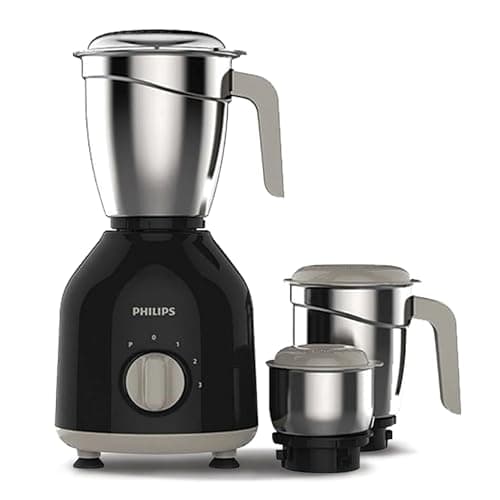
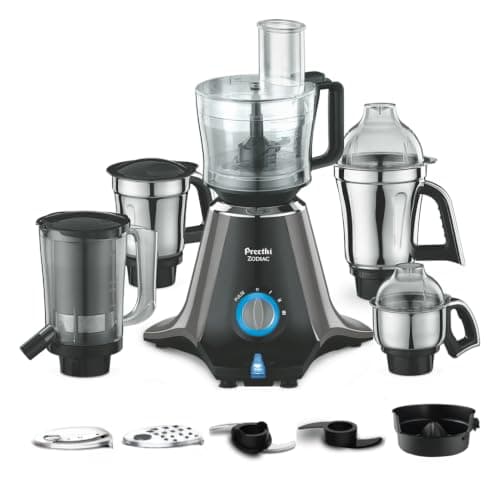
Right for: families of 3–6 cooking 2–3 meals daily. The Philips HL7756 at ~₹3,500 is the value benchmark here, and the Preethi Zodiac adds 5 jars including an atta kneader for joint families.
1000W+: heavy duty and bulk
Handles: continuous 25–30 minute runs, dry coconut and turmeric, large wedding-scale batches, daily heavy grinding without breaks.
Trade-offs: louder, heavier, pricier, and uses marginally more electricity (though grinding time is shorter, so real consumption difference is small).
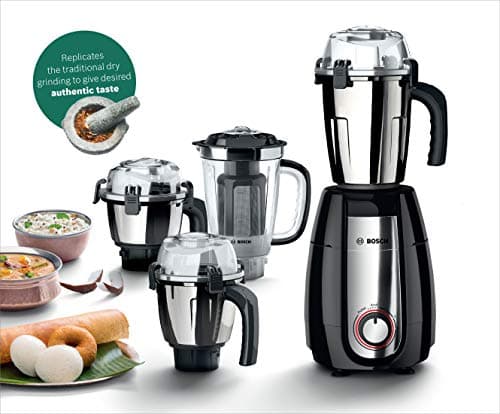
Right for: joint families, tiffin services and home food businesses, South Indian households grinding batter 4–5 times a week. The Bosch Pro 1000W runs 30 minutes continuously — German over-engineering at its best.
The wattage myth that costs people money
"Higher wattage = better mixer" is the single most expensive misconception. A 1000W mixer used for daily chutneys is wasted money and unnecessary noise. Match the wattage to your heaviest regular task, not your once-a-year one. For a once-a-year bulk grind, your local flour mill charges ₹20.
Don't forget these non-wattage specs
- Overload protection: non-negotiable. It's the difference between a tripped switch and a burnt motor.
- Motor warranty: 2 years minimum; Preethi offers 5.
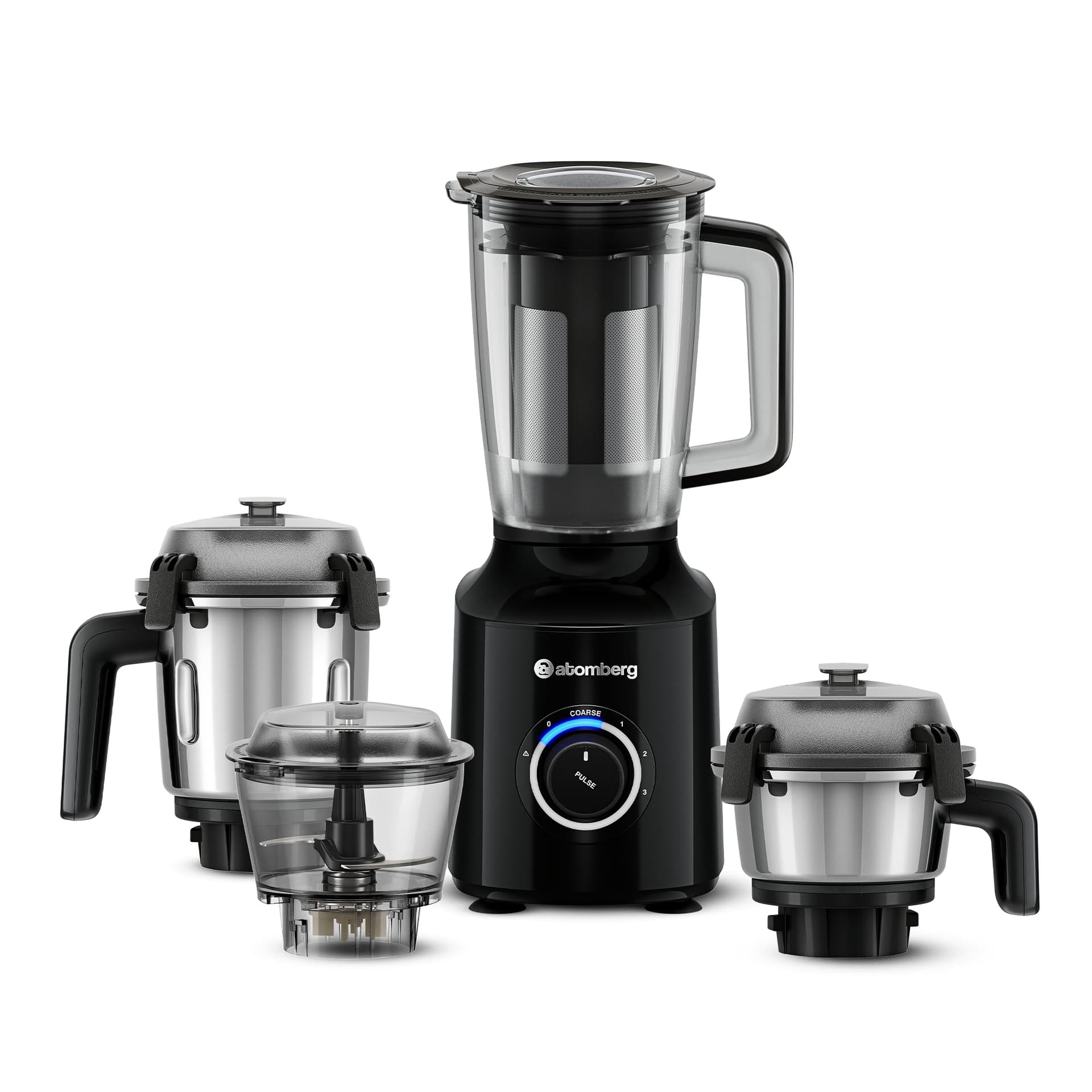
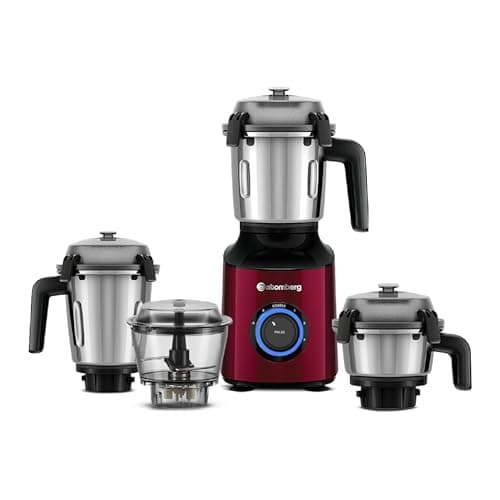
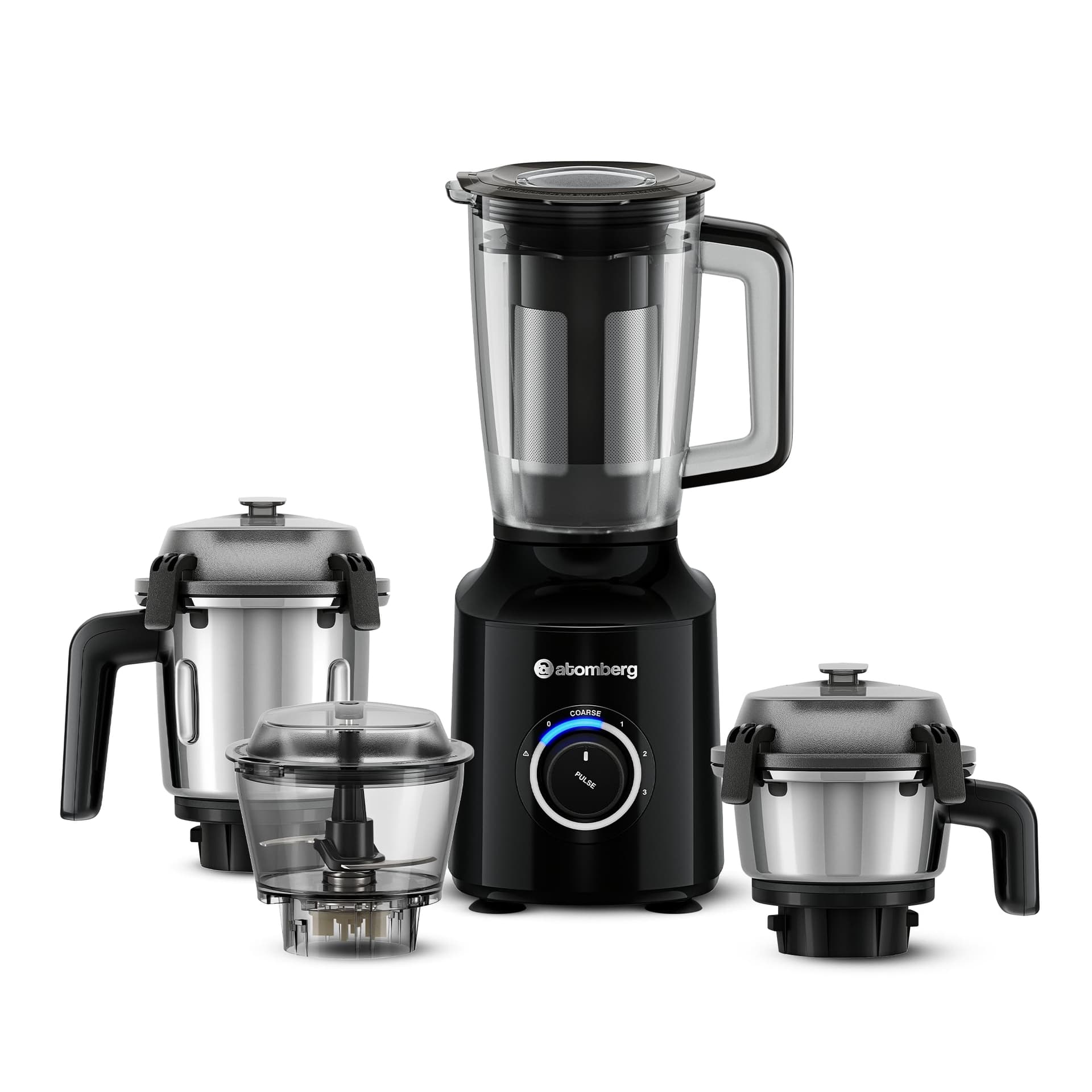
- Noise: if you grind at 6 AM, consider the BLDC-motor Atomberg Zenova — 65% quieter than conventional mixers.
- Jar build: stainless steel with thick flush-fitted blades. Jars die before motors.
Quick decision table
- 1–2 people, chutneys and shakes → 500W (or stretch to 750W for headroom)
- Family of 3–6, daily Indian cooking → 750W (default answer)
- Joint family, food business, batter 4+ times a week → 1000W
Ready to pick a model? Our best mixer grinders in India guide ranks specific machines at every wattage, and our brand comparison covers Sujata vs Bosch vs Preethi vs Philips in depth.
FAQ
Is 500W enough for idli batter?
Technically yes for small batches, but the motor strains and overheats with regular use. For weekly batter, 750W is the realistic minimum.
Does a 1000W mixer use a lot more electricity?
Per month, the difference is a few rupees. It draws more power but finishes faster. Buy on capability, not electricity fear.
Can I grind dry coconut in a 750W mixer?
Yes, in small batches with pulsing. For large quantities regularly, 1000W handles it without heating.