Air Fryer vs Microwave: Which Should You Buy in India? (2026 Guide)
Confused between an air fryer and a microwave? Here's a complete comparison for Indian kitchens — energy use, cooking quality, price, and the best picks for each.

B.Tech, Mechanical Engineering · Certified Home Appliance Safety Auditor (BIS-recognized) · 8+ yrs product testing
Priya has over 8 years of experience reviewing home appliances and kitchen products. A mechanical engineering graduate and certified home-appliance safety auditor, she has personally tested 400+ products and led lab comparisons for major consumer publications. She tests every product in real Indian kitchen conditions before it earns a recommendation.
If you're choosing between an air fryer and a microwave for your Indian kitchen, you're asking the right question. Both are countertop appliances. Both speed up cooking. But they do very different things — and one is dramatically better suited to Indian cooking than the other.
In this guide, we break down the seven differences that actually matter, where each appliance shines, and which one we recommend for an average Indian household in 2026.
The short answer
Buy an air fryer if you mostly cook fresh meals, want healthier fried snacks (samosas, pakoras, cutlets, kebabs), and bake/roast occasionally. Buy a microwave if you mostly reheat food, defrost frozen items, or make quick milk/maggi-style meals. If you can only afford one and you cook actively, the air fryer wins for most Indian families.
1. What each appliance actually does
An air fryer is a compact convection oven. A heating coil at the top warms air, and a fan blows that hot air at high speed around the food. Result: crisp, golden exteriors with little to no oil.
A microwave excites water molecules inside food, heating it from the inside out. Great for reheating and defrosting; not great for crispness.
2. Cooking quality for Indian food
For Indian frying — samosas, pakoras, vada, kebabs, tikka, French fries, papad — the air fryer wins by a wide margin. You get a crispy texture that a microwave physically cannot produce. For roti, parathas, and dosas, neither replaces a tawa, but the air fryer can re-crisp leftover roti far better than a microwave.
3. Health
An air fryer uses up to 90% less oil than deep frying. A microwave doesn't use oil at all for reheating, but you can't actually cook most things in it. For families trying to reduce oil intake, the air fryer is the bigger win.
4. Energy use
Both consume similar power (typically 1000–1500W). The microwave finishes faster for reheating, but the air fryer is more efficient for actual cooking compared to a gas-cum-pan setup.
5. Price in India
Entry-level microwaves start around ₹5,000. Entry-level air fryers from trusted brands also start around ₹4,800–₹6,000. Mid-tier in both: ₹8,000–₹12,000. Premium: ₹12,000+. The air fryer market in India has matured a lot in 2026.
6. Counter space and family size
Air fryers typically take less counter space than microwaves but have lower capacity. A 4–4.5L air fryer suits a family of 3–4; for 5+ members, go for 5.5L or above.
7. Ease of cleaning
Modern air fryers come with dishwasher-safe baskets. Microwaves clean easily too. Slight edge to the air fryer if you do messy cooking.
Our verdict
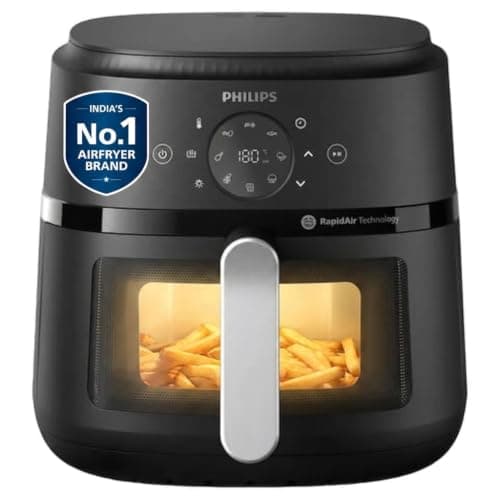
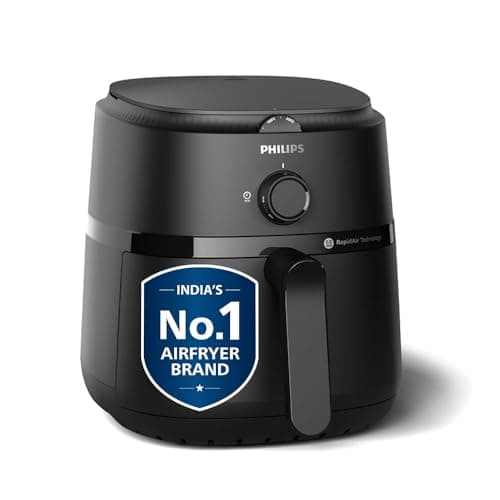
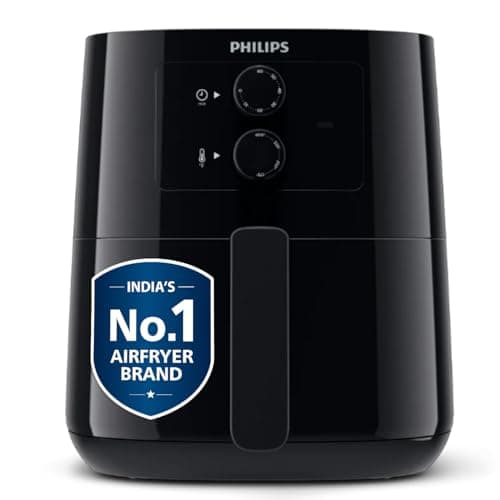
If your priority is healthier cooking and you actively cook (not just reheat), buy an air fryer. The Philips NA231 with its touch panel is our top pick at the ₹10,000 mark. If you're cooking on a tighter budget, the Philips NA120 at ~₹4,800 is a fantastic value.
If you mostly reheat, defrost, and make quick snacks for kids, a basic microwave is still useful — but it shouldn't be your only cooking appliance.
FAQ
Can an air fryer replace a microwave?
Not entirely. Air fryers can reheat food but slower than a microwave. If you reheat 5+ times a day, get a microwave. If you cook actively, get an air fryer.
Is an air fryer good for Indian cooking?
Yes. Indian frying like samosas, pakoras, kebabs, tikka, papad, and crispy paneer all work beautifully in an air fryer.
Which is cheaper to run?
Almost the same. The cost per use depends more on cooking duration than the appliance itself.